


If you’re ready to discover how AI can accelerate your product design workflow without losing its soul, let’s talk.
In 2023, a job posting for a “Prompt Engineer” promising a six-figure salary and requiring no coding went viral. Three years later, that exact title is quietly disappearing from job boards, while the skill behind it has crept into almost every technical role in the building. If you built a career, a hiring plan, or a product roadmap around clever prompting, the ground has shifted under you, and most people have not noticed yet.
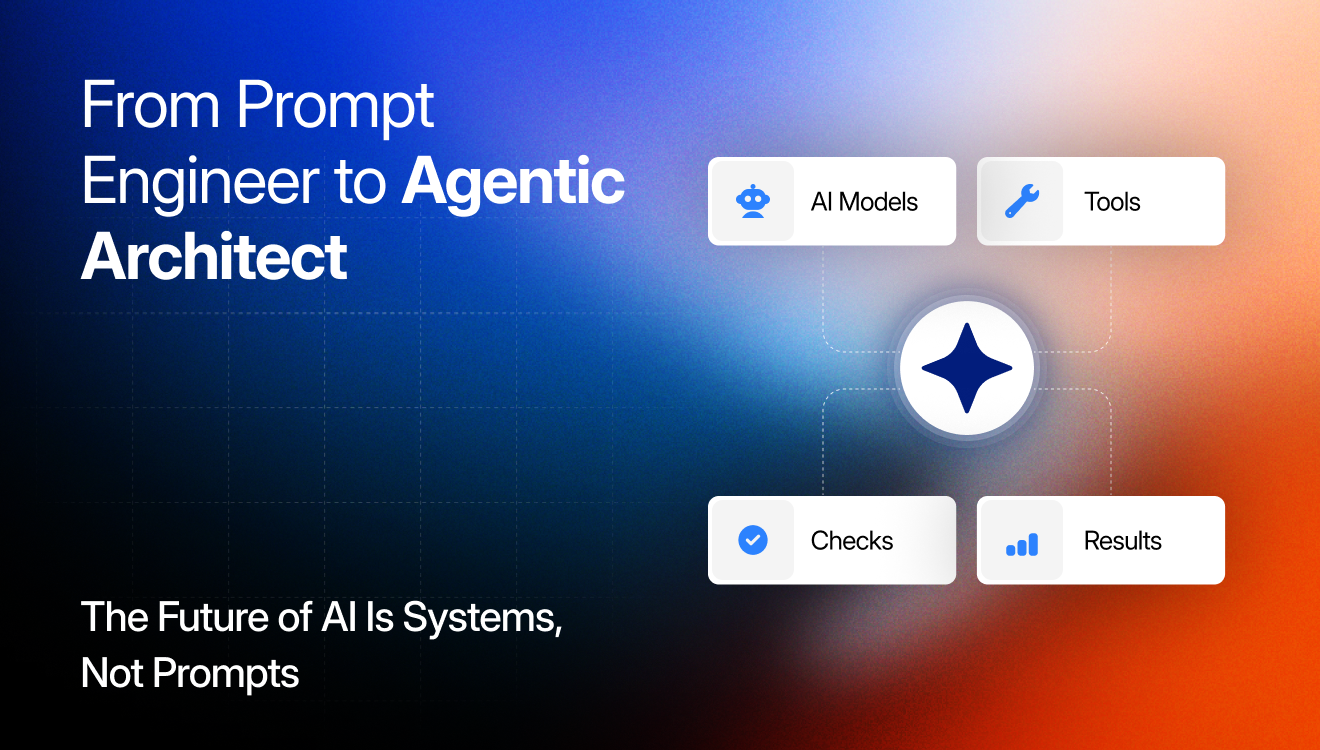
Here is the strange part. Prompt engineering did not fail. It worked so well that it got absorbed into something bigger and then its name stopped mattering. The person who used to win by writing one perfect instruction now wins by designing the whole system that decides what to ask, how to check the answer, and when to stop trusting it. That person has a new job, even if nobody has fully agreed on what to call it. For this article, we will call them the agentic architect, because that is what the work actually is.
This matters whether you write code or just sign the checks. The way businesses get value out of AI changed, and the skills, the hires, and the budgets are all moving to catch up. Let me show you what happened and what to do about it.
What “The Prompt Engineer Is Dead” Actually Means
The headline is dramatic on purpose, so let me be precise, because the honest version is more useful than the hype.
The standalone job title is fading. Across the industry, postings with “Prompt Engineer” in the title have declined, while postings that list prompt engineering as a skill grew roughly 250% over the same period. Read that twice. The title is leaving. The skill is going everywhere. Writing a clear instruction to a model is now treated the way writing a clean function is treated, as something every capable engineer is simply expected to do, not a career of its own.
IBM’s 2026 guidance describes the same pattern in plainer terms: prompt engineering as a job function has been folded into broader roles like workflow architect, AI systems designer, and process engineer. Lightcast’s data for the Stanford AI Index found agentic AI skills jumped from 0.06% of US job postings in 2024 to 0.23% in 2025, a rise of more than 280% and roughly 90,000 new postings. The demand did not vanish. It changed shape.
So “dead” is shorthand. The accurate sentence is longer and less exciting: the narrow craft of tweaking a single prompt stopped being enough to carry real work, and it got swallowed by the much larger job of building systems around the model.
Why One Clever Prompt Stopped Being Enough
To understand the shift, you have to understand what broke.
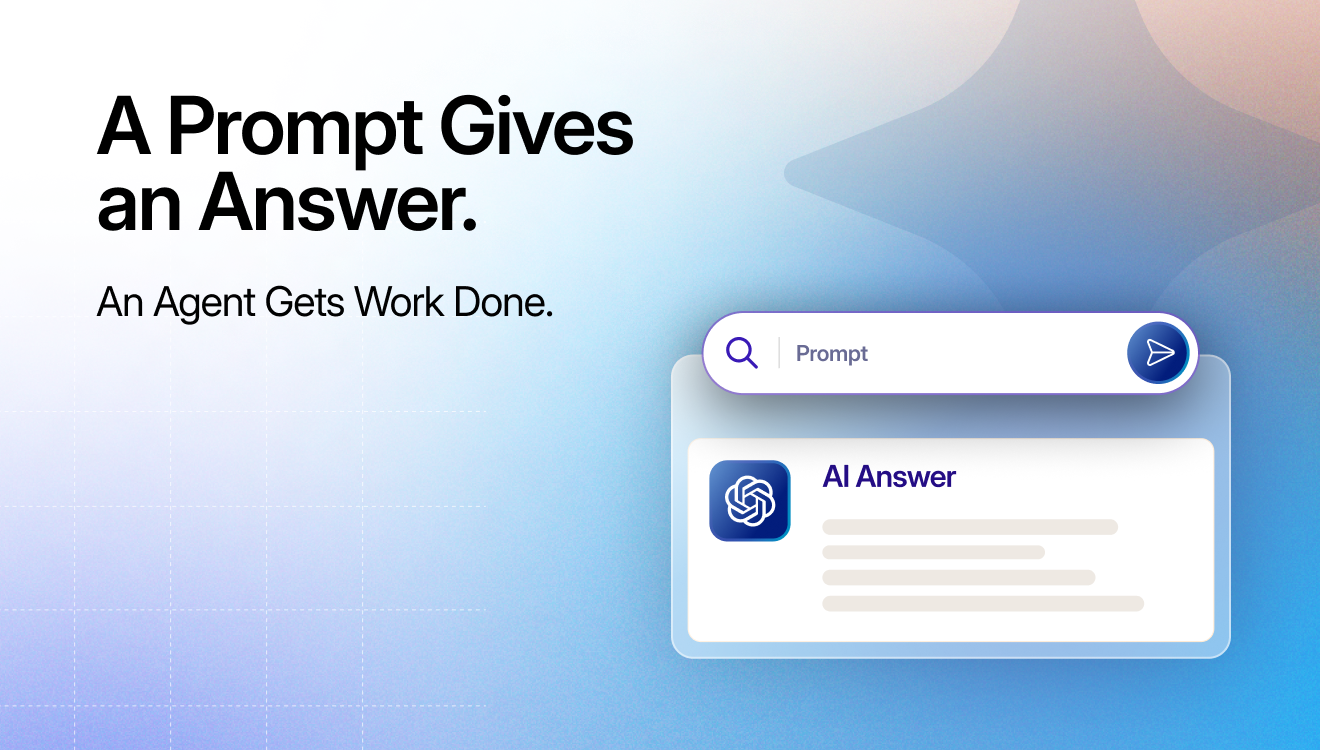
A prompt is a single instruction. It is one message, one shot, one response. That was fine when the main thing people did with AI was ask it a question and read the answer. But a single prompt cannot carry memory across a long task, cannot call external tools, cannot check its own work, and cannot recover when it gets something wrong halfway through. The moment you ask AI to do something real, like resolve a customer ticket end to end or pull data from three systems and draft a report, one instruction falls apart.
What replaced it is an agent, and an agent is not a prompt. It is a loop. The system takes a goal, breaks it into steps, uses tools, checks results, and decides what to do next, often across many cycles before it finishes. Writing the instruction is now the smallest part of the job. The hard part is designing the loop and deciding, at each step, when to trust what the agent produced.
This is not a fringe idea anymore. LangChain’s State of Agent Engineering survey of more than 1,300 professionals found 57% already have AI agents running in production. Among those teams, the top barrier is not creativity or prompting. It is quality and reliability. The problem moved from “how do I phrase this” to “how do I make this trustworthy enough to ship.”
Enter the Agentic Architect
If the prompt was an operator’s tool, the agent is an architect’s problem. Here is what that person actually does, and none of it is about finding magic words.
They decide how agents coordinate. A single task often gets handled by several agents passing work between them, and someone has to design how they share context, hand off, and escalate when they are stuck. Crucially, a good architect also knows when a plain script beats an agent entirely, which is a judgment most hype articles skip.
They engineer context, not prompts. The skill the industry now calls context engineering is, at its core, information architecture for a machine. It is deciding what the agent should know, in what order, from which sources, and what to leave out. The single-prompt era is over because the real leverage is in the surrounding context, not the sentence.
They build the checks. Agents are only useful if you can trust them, and trust comes from evaluation and observability, not hope. The same survey found 89% of teams running agents have put observability in place, while only 52% run formal evaluations. That gap, between watching agents and actually testing them, is exactly where the agentic architect earns their keep.
They own the trust boundary. Every serious agent system has a line where the machine stops and a human signs off. Deciding where that line sits, for a refund, a medical note, a financial trade, a published page, is a design decision with real consequences. This is judgment work, and it does not automate away.
Notice what all of this has in common. It is systems thinking, not syntax. As one practitioner put it bluntly, the role moved from being the doer to being the auditor and the strategist. The clever-prompt skill is now table stakes. The architecture is the job.
This Is Not Coming. It Is Already Here.
It would be easy to file this under “interesting trend, deal with it later.” The numbers say otherwise.
McKinsey found 40% of large firms are now scaling AI agents, up from 27% a year earlier. Deloitte predicts as many as 75% of companies will invest in agentic AI in 2026. Gartner projects that 40% of enterprise applications will embed task-specific agents by the end of 2026, up from less than 5% in 2025. That is not a gentle curve. That is a cliff, and most of the climb is happening this year.
The results behind those numbers are concrete, not theoretical. JPMorgan’s agentic orchestration reportedly delivered 83% faster research cycles and automated over 360,000 manual hours a year. TELUS built more than 13,000 custom AI solutions, shipped engineering work 30% faster, and saved over 500,000 hours. These are not demos. They are production systems built by people doing exactly the architect’s job described above.
There is also a plumbing story underneath all of this that matters more than it sounds. The Model Context Protocol, the open standard that lets agents connect to tools and data, reached more than 10,000 enterprise servers and over 97 million SDK downloads by April 2026, adopted by Anthropic, OpenAI, Google, Microsoft, and AWS. When the biggest competitors in the industry agree on the same wiring, the shift is no longer speculative. It is infrastructure.
What This Means If You Run a Business
So far this reads like a technology story. It is really a hiring and strategy story, and here is the part that affects your decisions.
If you are hiring for AI, stop looking for a “prompt engineer.” That search is aimed at a role that is consolidating out of existence. Look instead for people who can decompose a messy business process, connect AI to your real systems, and build the checks that make the output trustworthy. The title might read AI engineer, solutions architect, or automation lead. The skill you are actually buying is architecture.
If you are planning an AI project, the hardest work is not the model. Every serious team now says the same thing: the model is the easy part. The hard part is the context you feed it, the tools you connect it to, the evaluations that catch its mistakes, and the point where a human stays in the loop. A project scoped as “let’s add AI” almost always stalls. A project scoped around one specific, measurable workflow, built properly, is where the real returns show up. This is the same lesson behind every successful custom AI and automation build: start with the workflow that is costing you time, design the system around it, and make it reliable before you make it bigger.
If a vendor is selling you “an AI agent” with no mention of evaluation, observability, or where humans sign off, be skeptical. Those gaps are precisely where production agents fail, and the survey data proves it. A serious partner talks about the boring parts, because the boring parts are what make it work in the real world rather than in a demo.
What To Actually Do Next
You do not need to become an engineer to act on this. You need to ask better questions and aim your resources at the right target.
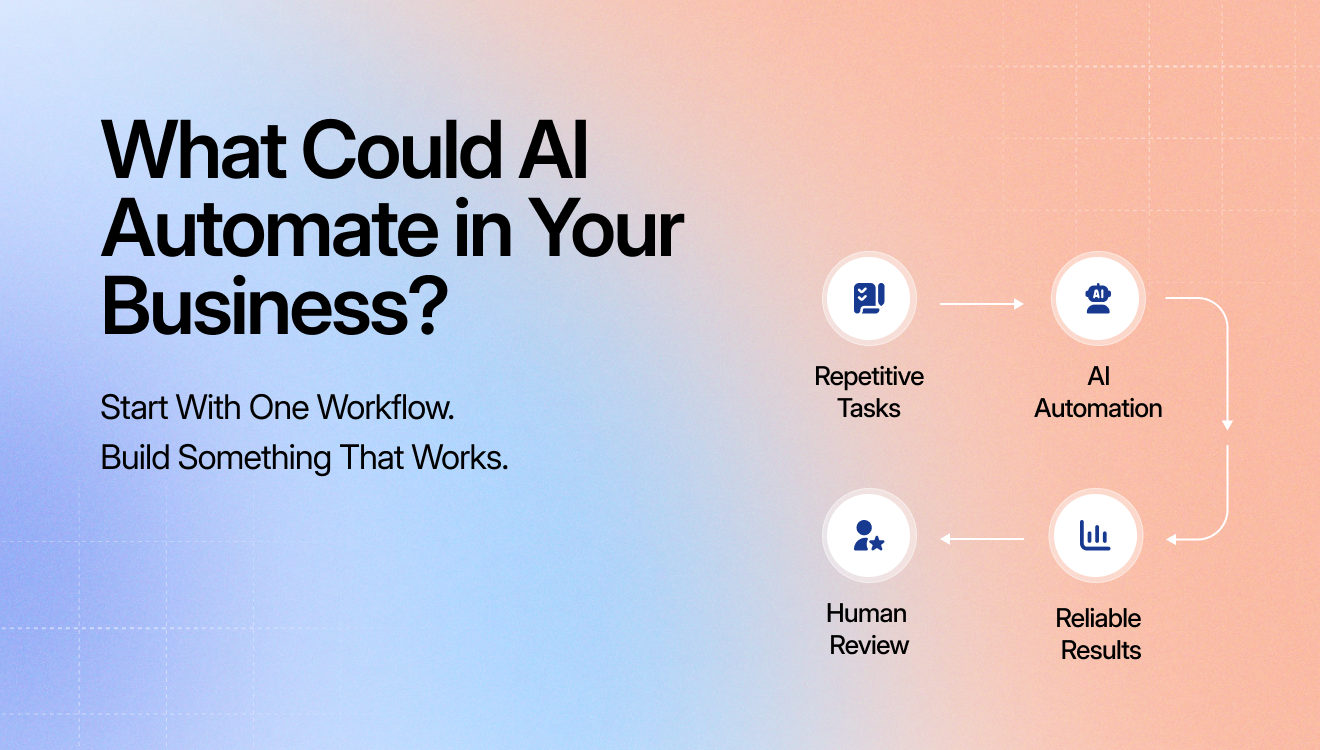
Start by naming one process in your business that is repetitive, measurable, and currently eats hours. Not the flashiest idea, the most repeated one. That is where an agent earns its return first, and starting narrow is what separates the companies seeing results from the ones stuck in pilots.
Then ask the architect’s questions about it, even if you are not the one building it. What does the AI need to know to do this well? What systems does it have to connect to? How will we know when it gets something wrong? Where does a human have to stay in the loop? If you can answer those four, you have the beginning of a real plan rather than a science experiment.
And if that list feels like a lot to work through alone, that is normal, because it is genuinely a new discipline. Mapping a business process into a reliable agent system is exactly the kind of work our team handles through technical consulting and AI architecture.
The Uncomfortable Truth
The prompt engineer did not lose because they were wrong. They lost because the thing they were good at became something everyone can do, while the real value moved up a level to the people who design the systems.
That is how this usually goes. The early skill gets commoditized, and the advantage shifts to whoever understands the whole machine rather than one part of it. In 2023 the edge was writing a clever prompt. In 2026 the edge is architecture, judgment, and knowing where to put the human. The businesses that internalize that now, while competitors are still trying to hire for a title that is quietly disappearing, are the ones who will get the returns everyone else is still reading case studies about.
The era of the clever prompt is over. The era of the agentic architect has already begun. The only real question is which side of that shift your business is building for.
Build the System, Not Just the Prompt
This is the work Webforest does. We design and build custom AI agents and automation around one real workflow in your business, with the context, tool connections, evaluations, and human sign-off that make the output safe to actually rely on. Not a demo. A system that holds up in production, built by a senior team with 12+ years and 500+ projects behind it.
If there is a process in your business that repeats every day and quietly eats hours, that is the place to start. Tell us what it is, and we will map it with you: where an agent fits, where it does not, and what a reliable build would actually look like.
Find the workflow AI should fix first.
Start with a free AI opportunity review. No pitch, no obligation, just an honest read on whether an agent is the right tool for the job or whether something simpler would serve you better.
Frequently Asked Questions
Is prompt engineering really dead in 2026?
As a standalone job title, it has largely collapsed. As a skill, it is more in demand than ever. Industry data shows “Prompt Engineer” titles declining while prompt engineering listed as a skill grew around 250%. The craft got absorbed into broader roles like AI engineer, context engineer, and agentic architect, where writing good instructions is now expected rather than a career in itself.
What is an agentic architect?
An agentic architect designs the systems that run AI agents, rather than writing individual prompts. The work includes deciding how agents coordinate, engineering the context an agent needs, building evaluations and monitoring so the output can be trusted, and defining where a human has to sign off. It is systems design and judgment, not finding the perfect wording.
What is the difference between prompt engineering and context engineering?
Prompt engineering is crafting a single instruction to a model. Context engineering is designing everything around the model, which information it receives, in what order, from which sources, plus the tools, memory, and checks it uses across a whole task. Context engineering is essentially information architecture for a machine, and it is where the leverage now lives.
Does my business need agentic AI or just better prompts?
It depends on the task. A one-off question is fine with a good prompt. A real business process that spans multiple steps, systems, and decisions needs an agent, and more importantly needs the architecture around it. The practical test is whether the work repeats, is measurable, and currently costs you real hours. If yes, that is where an agentic system usually pays off.
How fast is agentic AI actually being adopted?
Very fast. McKinsey found 40% of large firms scaling agents in 2026, up from 27% a year earlier. Gartner projects 40% of enterprise applications will embed agents by the end of 2026, up from under 5% in 2025. More than half of surveyed teams already run agents in production. This is a current shift, not a future one.
What should I look for when hiring for AI roles now?
Look past the “prompt engineer” title. Prioritise people who can break down a business process, connect AI to your existing systems, and build evaluation and monitoring so the results are trustworthy. The valuable skill is architecture and judgment. Clever prompting is now assumed, not the differentiator.

 From India


