


If you’re ready to discover how AI can accelerate your product design workflow without losing its soul, let’s talk.
A homeowner in Austin needs an emergency plumber. Two years ago she typed “emergency plumber near me” into Google and scrolled the results. Last week she opened ChatGPT and asked, “who’s a reliable emergency plumber in South Austin, and what should I expect to pay?” She got one paragraph, three business names, and a rough price range. She never saw a list of blue links. She called the first name in the answer.
If your business was not one of those three names, you did not lose to a competitor who ranked higher. You lost to a competitor the AI decided to mention, while you were never in the room. Right now, AI is already answering questions about other businesses in your industry. The only question that matters is whether yours is in the answer.
This is the shift nobody fully prepared for, and it is happening faster than most business owners realise. Gartner predicted traditional search volume would fall 25% by 2026, and as of mid-2026 that has largely played out. ChatGPT now serves around 800 million users a week. Google’s AI Overviews reach over two billion people a month. Your customers still search. They just increasingly ask instead of type, and they act on an answer instead of a page of options.
So the question for any business in 2026 is no longer only “do we rank on Google?” It is “when someone asks an AI about what we do, are we the answer it gives?” Getting that answer to be yes is a different job than SEO, and it has a name.
What GEO Actually Is
Generative Engine Optimization, or GEO, is the practice of structuring your content and your online presence so AI systems like ChatGPT, Perplexity, Google AI Overviews, Gemini, and Claude quote and recommend you when they answer a question.
Traditional SEO earns you a position in a list of links. GEO earns you a mention inside the answer the AI writes. That is the whole difference in one line. SEO fights for the click. GEO fights for the citation.
You will hear this called a few different names, because the industry has not settled on one yet. Answer Engine Optimization (AEO), AI SEO, and large language model optimization all point at the same goal: get your business named and cited when an AI responds. The label matters less than the shift behind it.
Here is the part that trips people up. GEO is not a replacement for SEO, and treating it as a rival channel is a mistake. AI assistants find their sources by searching the live web, often through Bing’s index, which means your traditional search foundations directly feed your AI visibility. A business with weak SEO tends to have weak GEO too. The two reinforce each other, which is exactly why we treat local SEO and content as the groundwork GEO is built on, not a separate project. What GEO adds on top is a specific set of demands around how your content is structured, how quotable it is, and how much verifiable substance it carries.
Why “Just Rank on Google” No Longer Covers It
For fifteen years the deal was simple. Rank in the top few results, earn the click, get the customer. That deal is quietly breaking.
When an AI answers a question directly, the user often gets everything they need without visiting a single website. Being ranked number one for a query does not guarantee a click when the AI has already summarised the answer above the links. For many searches now, the AI’s summary is the only thing the customer reads.
The businesses feeling this first are the ones whose customers ask comparison and recommendation questions, which is nearly everyone. “What’s the best CRM for a small law firm.” “Who builds Shopify stores for supplement brands.” “Is [company] any good.” Every one of those questions gets answered by an AI naming specific businesses. If your competitor set up their content to be quotable and you did not, they get named and you do not, regardless of who ranks higher on the old scoreboard.
None of this means SEO is dead. Traditional organic search still sends far more traffic than all AI assistants combined. But AI-referred visitors tend to arrive further along in their decision and convert at higher rates, because the AI has already vouched for you. That combination, lower volume but higher intent, is exactly why ignoring GEO is expensive even while SEO still pays the bills.
How AI Decides Who to Cite
To optimise for something, you have to understand how it chooses. AI search does not work like Google’s ranking algorithm, and this is where GEO earns its keep.
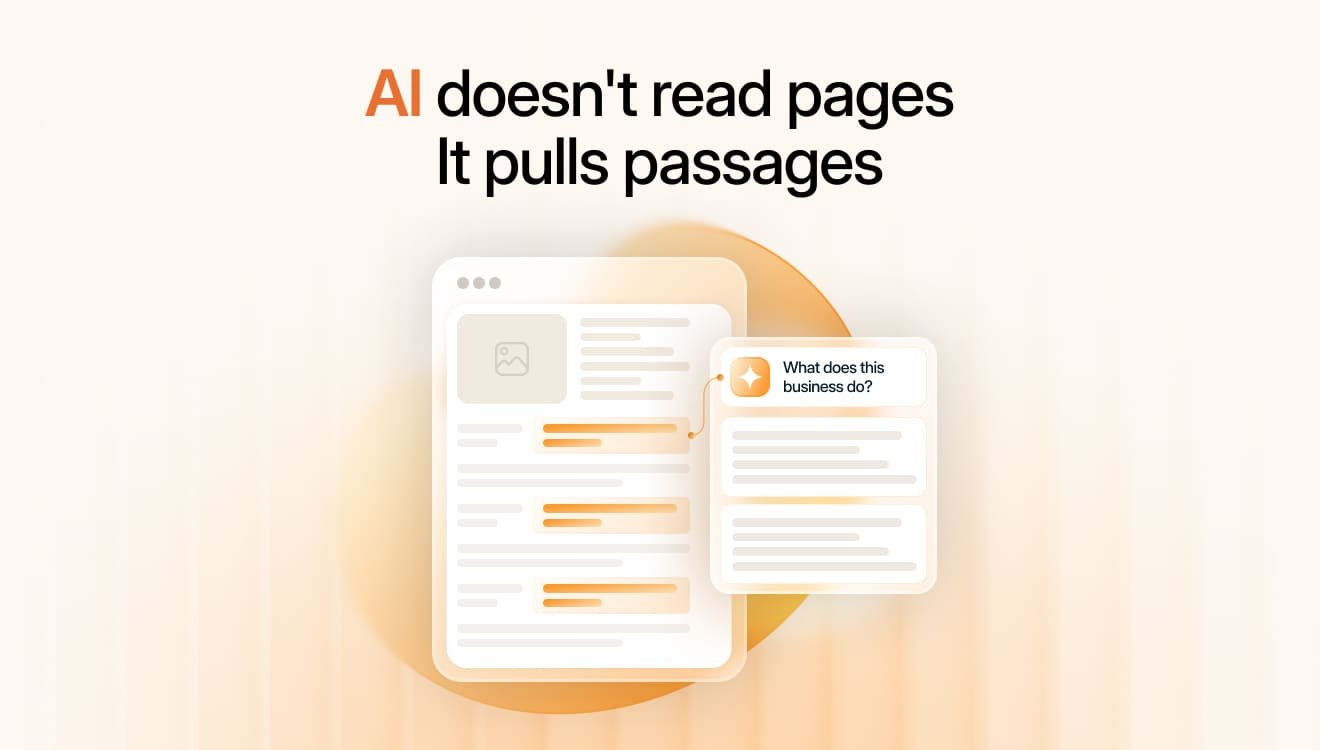
When you ask ChatGPT or Perplexity a question, the system does not paste your question into a search box and read the top result. It uses retrieval-augmented generation, which works in two moves. First it breaks your question into smaller sub-questions and searches for each one. Then it pulls specific passages from across many sources and stitches them into a single answer. It is selecting passages, not pages.
That one detail changes how you write. If the answer to a customer’s question is buried in paragraph nine of a long page, the AI is unlikely to find and lift it. If it sits in a clean, self-contained passage near the top, phrased the way a person would ask it, the AI can grab it and cite you. You are not writing to rank a page anymore. You are writing extractable answers.
Princeton-led research across roughly 10,000 queries found that adding statistics, citing your sources, and including direct quotations can lift a page’s visibility in AI answers by up to 40%. Vague, unsupported marketing copy is invisible to these systems. Specific, sourced, substantive writing is what gets pulled.
Different engines also favour different places. ChatGPT leans on Reddit and Wikipedia. Perplexity always shows citations and leans toward authoritative sources, LinkedIn, and community sites like G2. Google’s AI Overviews rewards clean FAQ and how-to structure. So part of GEO is not even on your own website. It is making sure your business is described consistently and credibly in the places these engines trust.
What To Actually Do About It
Enough theory. Here is the practical work, roughly in the order that returns the most value.
Answer the question in the first hundred words
AI systems retrieve short passages, so the direct answer to whatever a page is about should sit near the top, before the buildup and the backstory. Write the plain answer first, then expand underneath it for the reader who wants depth. A useful test: could someone copy your opening paragraph, paste it as the answer to the question, and be correct? If yes, an AI can do the same and credit you.
Write in short, self-contained passages
Long walls of text are hard for these systems to parse and rarely get cited. Keep paragraphs to a few sentences. Make each section answer one clear question so it can stand on its own when lifted out of context. This is also just better for the human reading on a phone, which is the point.
Back every claim with something checkable
A named statistic, a real source, a specific example, a concrete number. This is the single highest-leverage habit in GEO, because AI systems are built to prefer sourced substance over confident fluff. “We deliver great results” is worthless to a machine and to a skeptical reader. “Local SEO returns roughly thirteen dollars for every dollar spent, per industry data” is quotable.
Build genuine FAQ content in your customers’ words
Real questions, phrased the way people actually ask them, with clear answers underneath. This maps directly onto how people query AI, and engines like ChatGPT frequently lift FAQ-formatted content close to verbatim. Skip the generic filler questions. Use the ones your customers really ask on calls.
Add structured data so machines understand you
Schema markup, specifically Organization, FAQPage, and Article, tells AI systems plainly who you are, what you do, and what you are known for. Without it, the machine has to guess, and it may guess a competitor instead. This is technical and one-time, and it is worth doing early. If your site was built without it, this is usually a quick fix, and it is one of the first things we check in a technical review of a site’s AI-readiness.
Make yourself easy to trust, on and off your site
AI systems weigh credibility heavily. A named author with a real bio, visible publish dates, consistent business details everywhere online, and mentions on sites the engines already trust all raise the odds you get cited. Since ChatGPT’s search leans on Bing, something as basic as submitting your sitemap to Bing Webmaster Tools genuinely matters and almost nobody does it.
Keep your content fresh
AI systems favour recent information, and stale pages fade out of citations over time. Content that is not refreshed tends to drop off within a few months. The businesses that keep updating stay in the answers. The ones that publish and forget quietly disappear.
One honest note on timelines. GEO is not instant. Expect roughly four to eight weeks between publishing solid work and seeing yourself show up in AI answers. This is a compounding investment, not a switch you flip.
That list is a lot to run alone while also running a business. If you would rather have someone map which of these gaps is actually costing you AI visibility, our team does that as part of a free AI visibility and SEO review. No obligation, and you keep whatever we find.
How to Check Where You Stand Right Now
You do not need a tool or a budget to start. You need ten minutes and a list of the questions your customers ask before they buy.
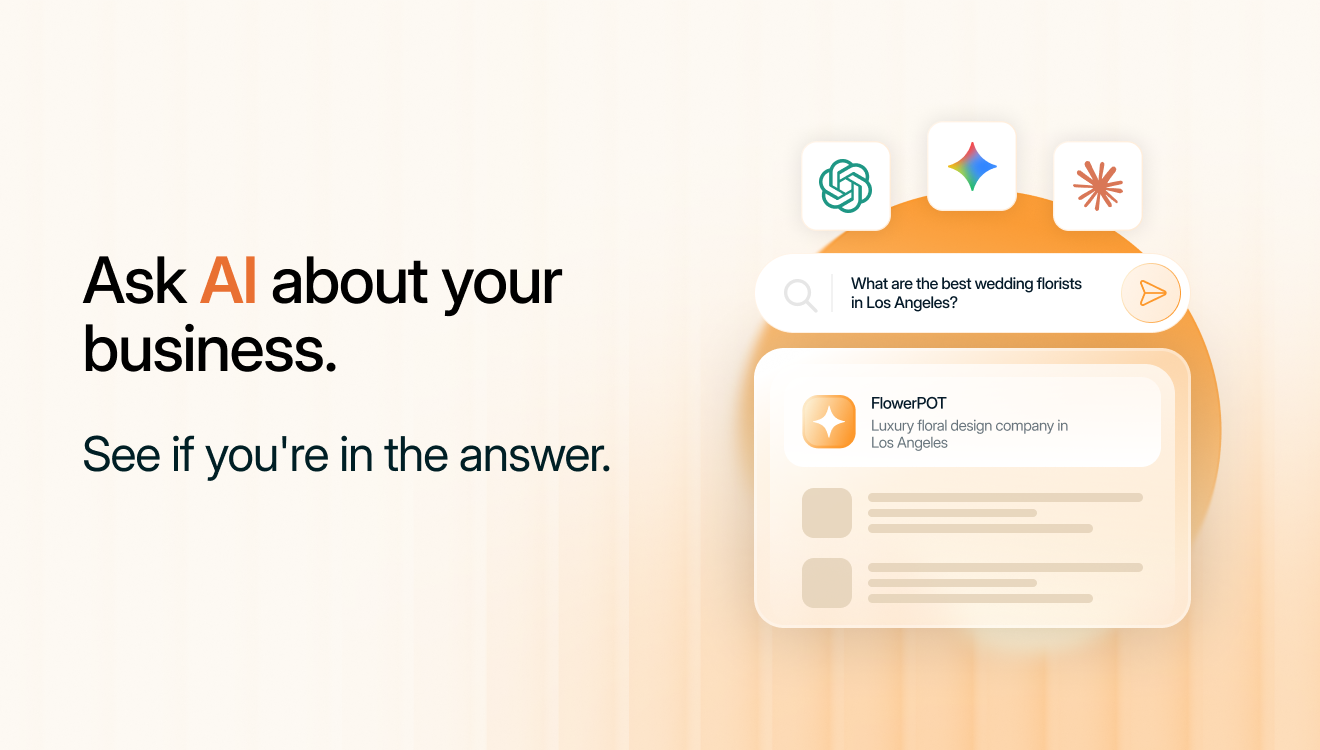
Take five of those questions and ask each one to ChatGPT, Perplexity, and Google’s AI mode. Watch for three things: does your business get named at all, how does the AI describe you when it does, and which sources is it citing instead of you. That last one is gold, because those cited sources are exactly the places you need to be present. If the AI recommends three competitors and never mentions you, that is not a reason to panic. It is a map of the work in front of you.
Where This Is Heading
We are early. The GEO playbook is being written in real time, which is precisely why acting now is an advantage rather than a scramble. Apple is building AI search into Safari. Google keeps expanding AI Overviews and AI Mode. ChatGPT is adding shopping and more search features every quarter. AI search usage is only going up, and the businesses that make themselves quotable now will have a real head start over the ones who wait for it to feel urgent.
The uncomfortable truth is that in AI search, the business that made itself easiest to cite usually wins the mention, and that is often not the biggest or the best. It is the one that did this work while competitors were still arguing about whether it mattered.
Where Webforest Fits
We work with businesses on exactly this: the technical setup, the content and search foundations, and the on and off-site signals that decide whether an AI names you or your competitor. Not as a bolt-on trick, but as an extension of the SEO work that feeds it. If you have read this far and want to know where your business actually stands in AI search today, that is the honest first step, and it costs you nothing to find out.
You can start yourself with the ten-minute check above. If you would rather see the full picture, mapped against your competitors and your specific customer questions, ask us where you stand and we will run it for you.

 From India


