


If you’re ready to discover how AI can accelerate your product design workflow without losing its soul, let’s talk.
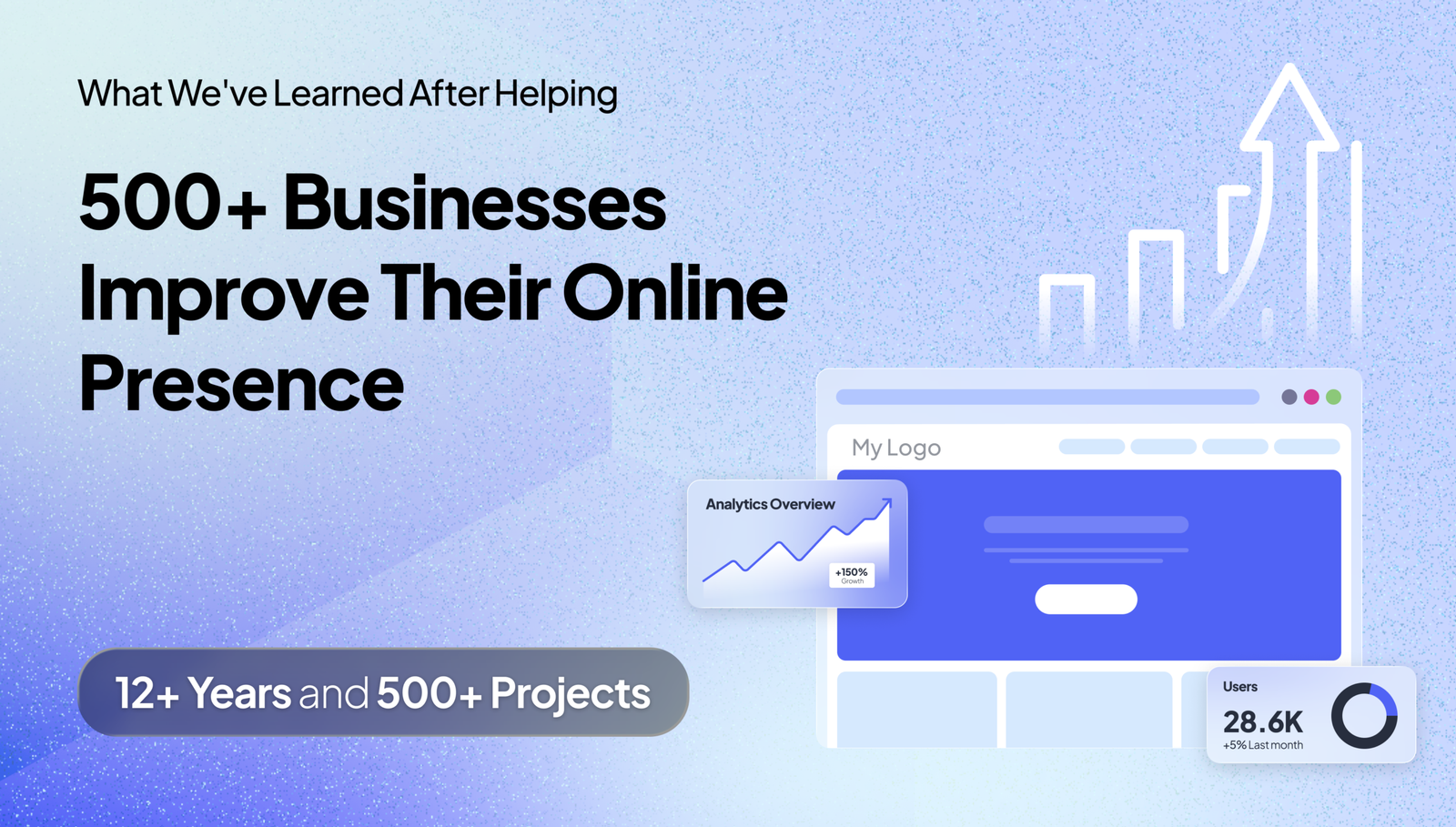
After working with 500+ businesses across 15+ countries over 12+ years, we have identified the same pattern repeating in local business after local business: the website exists, Google finds it, customers land on it, and then they leave without calling.
The seven most important lessons from this work are:
(1) Most local businesses lose customers after the search, not before it;
(2) Google Business Profile is now more important than the homepage for local discovery;
(3) A slow, unclear mobile site is the single biggest conversion killer;
(4) Reviews decide the call before the customer reads a single word of your website;
(5) Missed calls and slow follow-up are the most expensive leak in any local business;
(6) Local SEO only works when the website is ready to convert the traffic; and
(7) Businesses that treat their online presence as a system consistently outperform those that treat each piece as a separate task.
Introduction
Most local businesses do not have a visibility problem. They have a conversion problem.
The website is there. The Google listing is set up. Ads might even be running. But the phone does not ring the way it should, and nobody can explain why.
After working with 500+ businesses across web, SEO, local search, and digital systems over 12+ years, we have seen this pattern more than any other. The gap is rarely where business owners think it is.
This is what we have learned. Not theory, not generic advice, the patterns that showed up again and again across HVAC companies, plumbers, roofers, electricians, cleaning services, landscapers, clinics, and dozens of other local trades and services.
Lesson 1: Most Local Businesses Lose Customers After the Search, Not Before It
The most persistent assumption we encounter is this: “We need more traffic.” In most cases, that is not the problem.
According to BrightLocal, 97% of people check out a company’s online presence before visiting a location or making a purchase. The customers are looking. They are finding businesses. The question is what happens next.
When a potential customer lands on a local business website from a search result, they are deciding in seconds. Can I tell what this business does? Do I trust them? Can I reach them easily? If the answer to any of those questions is no, they go back to the results and call the next listing.
This is what we call the conversion gap, and it is the same problem we look at in every UX audit we run. It is rarely about how a site looks, and almost always about where users lose clarity, trust, or momentum before they act. Closing that gap is usually worth more than buying more traffic.
What this means for your business: Before investing in ads or more SEO, audit the path from landing on your site to making contact. Where does it break down?
Lesson 2: Google Business Profile Is Now Your Most Important Page
For most local businesses, the Google Business Profile now does more work than the homepage.
Google Business Profile actions increased 41% year-over-year, with calls, direction requests, and website visits from GBP growing rapidly according to Google 2026 data.
Local SEO delivers approximately $13 for every $1 invested, making it one of the highest-ROI marketing channels for local businesses.
The reason is simple. When someone searches for your service on a phone, they often never reach your website. They see your GBP listing, read your reviews, check your photos, and call directly from the search result. AI Overviews, the generative AI-powered summaries that sit atop Google’s traditional search results, now appear for 68% of local searches, according to Search Engine Land. For many searches, the GBP listing is the only impression you get.
GBP signals are the single largest local pack ranking factor at 32%, according to Whitespark and BrightLocal’s 2026 Local Search Ranking Factors survey. Yet most businesses we have worked with treat their GBP as a one-time setup task rather than the ongoing, structured discipline it actually requires, which is exactly the gap our local SEO services are built to close, since GBP optimization, NAP consistency, and review management are core parts of that work, not an afterthought.
A tracked HVAC company moved from position 6 to position 3 in 60 days by posting twice weekly and adding four new job-site photos per month, with no other changes made to their SEO.
What this means for your business: Treat your GBP with the same care you give your website. It is often the only page that matters for local search.
Lesson 3: A Slow, Unclear Mobile Site Is the Single Biggest Conversion Killer
Mobile devices accounted for 52.27% of global website traffic in Q1 2026. For local service businesses, the figure is even higher, since most customers searching for a plumber, HVAC technician, or cleaner do so on their phones, usually mid-problem.
That context matters. A customer with a burst pipe or a broken AC unit is not browsing. They are deciding fast, and friction is fatal.
The most common issues we find when we run a mobile and conversion UX audit for a local business:
Your phone number is not visible without scrolling. On a mobile screen, a customer in a hurry will not look for it.
The page takes more than three seconds to load. 53% of mobile visitors abandon a page that takes more than three seconds to load.
The homepage explains what you do, but not why someone should choose you over the other three results. Being clear is not the same as being convincing.
The contact form asks for too much information before earning the right to it.
None of these are design problems. They are conversion problems, and they are each fixable without rebuilding the whole site.
What this means for your business: Open your website on your phone, on mobile data, not wifi. Time: how long it takes to find your number. That experience is what every customer has.
Lesson 4: Reviews Decide the Call Before the Customer Reads Your Website
GBPs with 50+ reviews win 4.4x more clicks than those with under 5 reviews. GBPs crossing 100 reviews saw 31% year-over-year lead volume growth, according to Visionary Marketing’s GBP crawl study of 180,000 profiles in 2026.
Most business owners know reviews matter. What they underestimate is how early in the decision they matter. A customer comparing two HVAC companies in the local pack often makes their choice based on review count and rating before they click on either website.
According to SOCi data, there is a nearly 3% lift in Google Business Profile conversions for every 10 new reviews a business earns.
The pattern we see repeatedly: businesses with 15 to 30 reviews and a 4.2 rating consistently lose calls to competitors with 80 to 150 reviews and a 4.7 rating, even when the first business does better work.
Reviews are not just a trust signal. They are a ranking factor. Review signals make up 16% of local pack ranking weight in 2026, covering quantity, velocity, recency, diversity, and sentiment.
The businesses that get this right have a system, not a hope. They ask every satisfied customer at the point of completed work, make the link frictionless, and respond to every review, whether positive or negative.
What this means for your business: Your review count right now is probably the fastest-return item on your online presence to-do list. One month of consistent asking after every job compounds quickly.
Lesson 5: Missed Calls and Slow Follow-Up Are the Most Expensive Leak
Visibility and a good website are only half the system. The other half is what happens after someone reaches out.
A customer who calls and gets voicemail during business hours has a high likelihood of calling the next business on the list, in our experience across dozens of local service business reviews. A customer who submits an inquiry form and receives a reply the next morning is often already booked with a competitor.
59% of consumers expect a response within 24 hours when they reach out to a local business. For service businesses where the need is often urgent, a leak, a broken system, a pest issue, that window is far shorter.
The fix is not always hiring more people. It is automating the first touch, a missed-call text-back, an instant form confirmation with an expected response time, and a same-day follow-up system, each achievable for small local businesses. This is precisely the gap a properly built CRM and workflow automation system closes: contact and lead management, automated follow-up triggers, and real-time alerts so no inquiry sits unanswered while a competitor’s phone rings instead.
The businesses we have worked with that implemented missed-call follow-up consistently report that it recovers a meaningful share of inquiries that would otherwise have gone unanswered.
What this means for your business: Map out what happens after a customer calls and does not reach someone, or submits a form outside business hours. That is where most leads are lost.
Lesson 6: Local SEO Only Works When the Website Is Ready to Convert
Around 80% of local searches lead to conversions, making local SEO one of the most impactful marketing investments for service businesses.
But that 80% conversion rate assumes the website can close the deal once the customer arrives. Sending SEO traffic to a site that does not explain your value, build trust, or make the next step obvious does not improve your results. It just increases your traffic before the leak.
The most common SEO mistake we see in local businesses is optimising for visibility before optimising for conversion. Rankings go up, traffic increases, and lead volume stays flat. The problem is not the SEO. It is the page the traffic lands on.
Poorly structured or generic keyword-stuffed content no longer delivers results. The most powerful content today is written with query specificity and local nuance, aligning directly with different types of search intent at different stages of the buyer’s journey. This is why we never treat local SEO as a standalone task at Webforest. Every campaign is paired with a conversion-focused review of the pages that traffic actually lands on, because ranking traffic into a page that cannot convert it is not a result; it is just a more expensive leak.
What this means for your business: SEO and conversion are not separate disciplines. Treat them as one system and they amplify each other. Treat them separately, and neither delivers full value.
Lesson 7: Businesses That Treat Their Online Presence as a System Win Consistently
The most important pattern across 500+ projects is this: the businesses that improve their online presence and sustain that improvement are not the ones who did the most things. They are the ones who connected the right things.
A well-optimised GBP sending traffic to a website that converts. Reviews build trust before the visitor arrives. A clear mobile experience making the call easy. A follow-up system capturing the leads that would otherwise slip through.
46% of all Google searches have local intent, a figure that has grown steadily from 30% in 2019. That is an enormous and growing stream of potential customers. The businesses winning that stream in 2026 are not the ones with the biggest ad budgets or the most social posts. They are the ones where each piece of the online presence connects cleanly to the next, which is the whole premise behind how we structure work at Webforest: a conversion-focused UX audit, SEO built for qualified visibility, and a CRM that captures and follows up on every inquiry, working as one system rather than three disconnected vendors.
More than 200 million near-me searches happen every month in early 2026, according to Glimpse. Every one of those is a customer in a specific area, with a specific need, ready to act. Whether your business shows up and earns that call depends entirely on whether your online system is set up to capture it.
What This Looks Like in Practice
Here is the framework we use when reviewing a local business’s online presence. Every item connects to the next.
Step 1: Google Business Profile audit
Is it complete, active, and keyword-relevant?
Does it have recent photos, posts, and 50+ reviews?
Is the primary category correct?
Step 2: Website mobile audit
Load the site on a phone, on mobile data. How fast is it?
How long to find the number? How easy is the form?
Does it explain why this business over a competitor?
Step 3: Review system
What is the current review count and average rating?
Is there a system for asking every customer?
Is someone responding to every review?
Step 4: Follow-up audit
What happens when someone calls and no one answers?
What happens when a form is submitted at 9pm?
Is there a same-day response system?
Step 5: Content and SEO
Do the service pages match what customers actually search?
Are they written in customer language or industry language?
Do they build trust through specificity?
Step 6: Tracking
Can you see where calls and form submissions come from?
Are you tracking which pages and keywords produce actual inquiries?
When all six are working together, the result is not just more traffic or better rankings. It is a predictable, measurable flow of qualified customer contacts that compounds over time.
A Note on AI Search and Local Businesses in 2026
One shift worth understanding before you leave this page. 45% of consumers used ChatGPT or AI tools for local business recommendations in 2026, up from 6% in January 2025, according to BrightLocal’s Local Consumer Review Survey 2026.
Customers are now asking AI tools to recommend local businesses. The AI tools recommend businesses with high review ratings, accurate business data across multiple platforms, and consistent mentions in authoritative sources. Three of the top five AI search visibility ranking factors in 2026 are citation-based, according to the Whitespark Local Search Ranking Factors report, including presence on expert-curated lists, prominence on top industry-relevant domains, and quality of unstructured citations in news and blog content.
This means the fundamentals of local online presence, consistent, accurate data, high review volume and quality, strong service pages, and clear business information are now doing double duty: they influence both traditional Google results and AI-powered recommendations. Businesses that get these right in 2026 are building a compounding advantage that will be difficult for competitors to replicate.
What We Do With This
Everything in this article is the same review we walk through with every local business we work with. Not a generic checklist, a structured look at your website and conversion path, your local search visibility, and the follow-up system that decides whether an inquiry turns into a customer or quietly disappears.
You can see examples of this work across industries in our portfolio, or get in touch if you want a clear-eyed look at where your own online presence currently stands.

 From India


