


If you’re ready to discover how AI can accelerate your product design workflow without losing its soul, let’s talk.
Let’s be real for a second.
If your business depends on Google traffic, something important has changed, and most business owners have not noticed it yet.
Over the past year, AI has quietly started transforming how search works. Google now shows AI-generated summaries directly on the search page. Tools like ChatGPT, Perplexity, and Microsoft Copilot provide full answers to users without requiring them to click a website.
The traditional SEO playbook, adding keywords, building links, and waiting for rankings, is no longer enough on its own.
The good news is that businesses that understand how to adapt SEO for AI search right now have a major advantage over competitors who are still relying on outdated strategies.
This guide explains what has changed, why it matters for your business, and the steps you can take today to stay visible online.
First, What Even Is AI-Powered Search?
Think about the last time you Googled something. You probably noticed that Google now shows a big AI-generated answer right at the top of the page before any website links appear. That is called an AI Overview.
Instead of showing you ten blue links and letting you choose, Google now tries to answer your question itself. It reads thousands of websites, picks out the best information, and writes a summary for you.
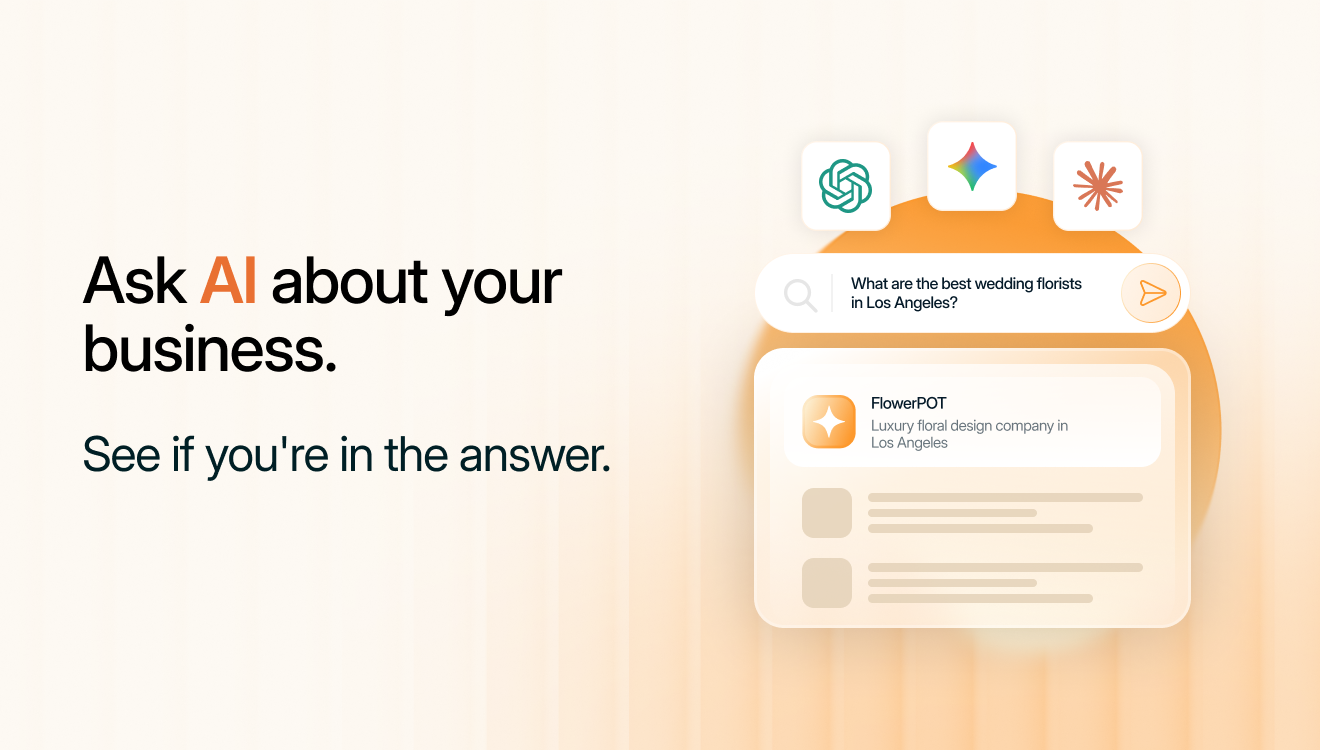
Other tools like ChatGPT, Claude, and Microsoft Copilot do the same thing. People type a question and get a full answer with no clicking required.
Think of it like this: Google used to be a librarian who pointed you to the right books. Now it reads the books for you and gives you a summary.
This sounds convenient for users. And it is. But for businesses that rely on website traffic, it creates a serious problem: people are getting answers without ever visiting your site.
The Rise of Zero-Click Searches
One of the biggest shifts happening right now is the growth of zero-click searches.
A zero-click search happens when users get the answer they need directly from the search page without visiting a website. AI Overviews, featured snippets, knowledge panels, and AI chat tools all contribute to this trend.
Recent studies suggest that over 60% of searches now end without a click.
This does not mean SEO is dead. It means the goal of SEO has expanded.
Instead of only trying to get clicks, businesses must now aim to become trusted sources that AI tools reference when generating answers.
When AI systems pull information from your content, your brand gains visibility even when users don’t click.
How Much Has This Actually Changed Things?
Here is a quick look at what is really happening right now:
| What Changed | What It Means for Your Business |
|---|---|
| Google now shows AI answers at the top | Fewer people click on website links |
| ChatGPT & Claude answer questions directly | People find answers without visiting your site |
| AI reads your content before Google does | Your writing style now matters more than ever |
| Old keyword tricks no longer work | You need to sound like a real expert, not a robot |
The scariest stat? Google search clicks have dropped by more than 30% for many businesses, even when their rankings stayed the same. You can be on page one and still lose traffic. That is the new reality.
So… Is SEO Dead?
No. Absolutely not. It Has Evolved
Traditional SEO was about getting your website to show up in Google search results. That is still important. But now there is a second game being played at the same time, getting your content picked up by AI tools as a trusted source.
When ChatGPT or Google’s AI gives someone an answer, it got that answer from somewhere. It reads websites, blogs, and articles across the internet. The businesses whose content is referenced in those AI answers gain massive visibility without even needing a click.
This new game is called Generative Engine Optimization, or GEO for short. It works alongside traditional SEO, not instead of it.
Old SEO goal: Show up in Google results. New SEO goal: Show up in Google results AND get referenced by AI tools as a trusted source.
What Does This Mean for Your Business Specifically?
Let us make this practical. Here are the three things that will decide whether your business wins or loses in AI-powered search:
1. Are You Seen as a Trusted Expert?
AI tools do not pick random websites to reference. They look for content that demonstrates genuine knowledge and expertise. Google calls this E-E-A-T Experience, Expertise, Authoritativeness, and Trustworthiness.
In simple terms: does your website look like it was written by someone who really knows their stuff? Or does it look like generic content that could have been written by anyone?
If your website has been relying on thin, keyword-stuffed pages, AI search will punish you. If your website has deep, helpful, specific content written by real experts, AI search will reward you.
2. Are You Answering the Right Questions?
People search differently now. Instead of typing two or three keywords, they ask full questions, especially when using voice search or AI tools. They type things like “what is the best way to build a mobile app for my small business” instead of just “mobile app development.”
Your content needs to answer these specific questions clearly and directly. AI tools love content that gives a clear answer fast. If your page dances around the topic without actually answering the question, AI will skip it.
3. Is Your Website Technically Healthy?
AI search engines still crawl websites the same way Google does. If your site is slow, hard to navigate, or full of broken pages, AI tools will not trust it. A clean, fast, well-structured website is no longer optional. It is the foundation on which everything else is built.
Practical Ways Businesses Can Adapt SEO for AI Search
Here is exactly what you should be doing right now:
The businesses gaining visibility in AI search are already applying several key strategies.
Write Like an Expert, Not a Keyword Machine
Content created purely to rank often sounds robotic and repetitive.
AI systems are trained to recognize genuinely helpful content.
Focus on:
- clear explanations
- practical examples
- expert insights
- real experiences
Helpful content performs better in both traditional search and AI search.
Address Real Customer Questions
Think about the questions customers ask before working with you.
Each of those questions can become a blog post or FAQ.
Content that answers specific questions clearly is highly valuable for AI-powered search results.
Build Topical Authority
Successful websites now focus on topical authority.
This means creating multiple pieces of content around a specific subject so search engines recognize your site as an expert source.
For example, a business offering app development services could publish content about:
- app development costs
- mobile app trends
- development frameworks
- startup app strategies
Over time, this cluster of content strengthens authority.
Structure Content So AI Can Understand It
AI systems scan web pages to extract useful information.
Content that uses a clear structure is easier for AI to interpret.
Helpful formatting includes:
- clear headings
- bullet points
- short paragraphs
- structured sections
Well-structured content improves readability for both users and AI systems.
Strengthen Your Brand Authority
AI tools also evaluate how often your brand appears across the web.
Authority signals include:
- mentions on trusted websites
- guest articles
- podcast interviews
- online reviews
- citations from other sources
The more your brand is referenced online, the more credible it appears to search engines.
Which Businesses Are Already Winning With AI Search?
The businesses seeing the best results right now share three things in common:
- They publish consistent, in-depth content that genuinely helps their audience
- They have a strong, recognisable brand that gets mentioned across the internet
- They treat their website as a long-term asset, not an afterthought
The businesses struggling are the ones still treating SEO like a one-time fix. They optimised their website two years ago, published a handful of blogs, and assumed the work was done. In AI-powered search, standing still means falling behind.
The businesses showing up in AI search results are not necessarily the biggest or most well-funded. They are the ones producing the most genuinely helpful content in their industry.
Where Does Webforest Come In?
Adapting your SEO strategy for AI-powered search is not something most businesses can figure out alone, and honestly, you should not have to.
At Webforest, we work with businesses across industries to build SEO strategies that work in both traditional Google search and the new world of AI-powered search engines. We do not just chase rankings. We build long-term digital authority that turns website visitors into paying customers.
Whether you need a complete SEO audit, a content strategy built around AI search, or a technically sound website that earns the trust of both Google and AI tools, our team knows exactly what to do and how to do it.
The Bottom Line
AI has changed how people find businesses online. That is not a prediction anymore; it is already happening. The businesses that adapt their SEO strategy for AI-powered search today will own their market tomorrow. The ones that wait will find themselves invisible.
The good news is that the changes needed are not mysterious or complicated. Write genuinely helpful content. Answer real questions. Build real authority. Keep your website healthy. These are the same things that have always made good businesses stand out. AI search just makes them more important than ever.
You do not need to do this alone. Webforest is here to help you every step of the way.
Ready to Prepare Your Business for AI Search?
Many businesses still rely on outdated SEO strategies.
Those who adapt early will gain a powerful advantage.
Webforest helps businesses build SEO strategies designed for the future of search.
→ Book a Free SEO Audit Consultation

 From India


